
California Commercial Access Floors: A 2025 Guide to CBC, CALGreen & Regional Compliance
- Addtime: 2025-10-21 / View: 206
California’s commercial construction sector faces unique challenges—from strict fire safety mandates (per the 2022 California Building Code, CBC) to eco-friendly requirements (CALGreen) and regional needs (humidity in coastal areas, dust in inland regions).
Access floors, often overlooked, are vital for meeting these standards while supporting functionality (e.g., wiring for tech spaces, cooling for data centers). This guide breaks down how to select access floors that align with California’s rules, includes actionable tools for comparison, and references product specifications to ensure reliability.
1. California’s Mandatory Standards for Commercial Access Floors
Before selecting any product, it’s critical to understand the state’s non-negotiable requirements—all grounded in official regulations:
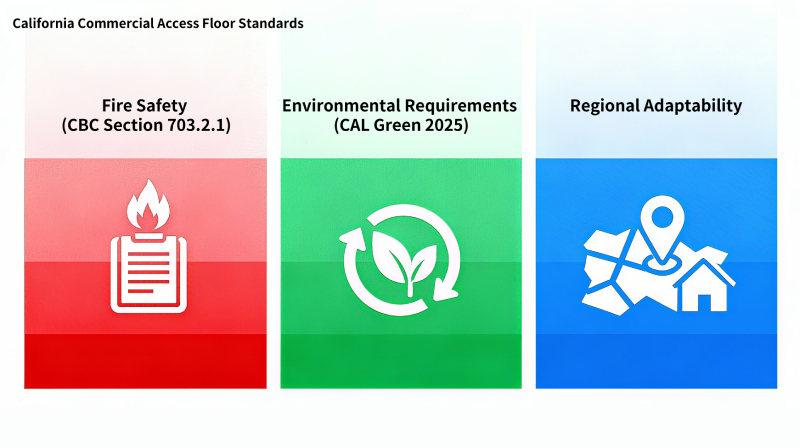
1.1 Fire Safety (CBC Section 703.2.1)
• Structural Integrity: Access floors in fire-resistance-rated assemblies must match the surrounding floor’s rating (minimum 45 minutes for Type II-B construction, 60 minutes for Type I-A).
• Testing: Must pass fire-resistance tests, with temperature rise ≤325°F on the unexposed side at 60 minutes.
• Flame & Smoke Control: Flame spread index ≤25 and smoke developed index ≤450 (ASTM E84, CBC Table 720.1).
1.2 Eco-Friendliness (CALGreen 2025)
• Recycled Content: Priority for structural components with high recycled material.
• Toxicity: No heavy metals (lead, mercury) or volatile organic compounds (VOCs) exceeding 0.5 mg/m³ (California Proposition 65).
1.3 Regional Adaptability
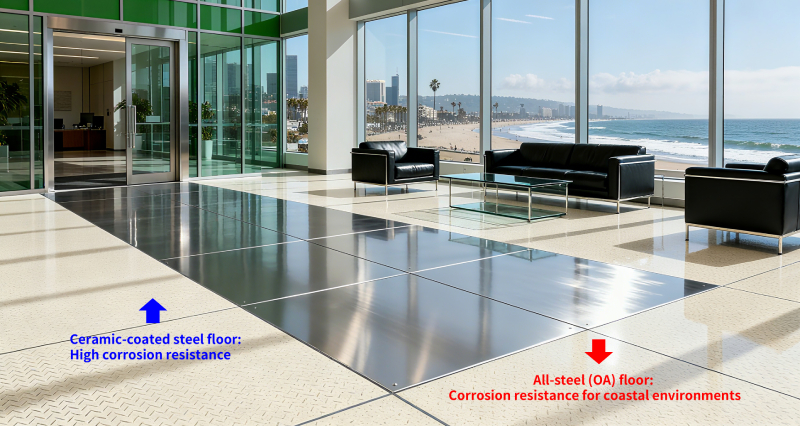
• Coastal Areas (e.g., Los Angeles, San Diego): Corrosion resistance is mandatory (humidity averages 60–75% annually; California Department of Water Resources).
• Inland Tech Hubs (e.g., Sacramento, San Jose): Anti-static performance is required for data centers and server rooms.
2. Access Floor Types: Which Fit California’s Needs?
|
Floor Type
|
Core Materials
|
Key Performance Metrics
|
California Use Case Fit
|
Compliance Notes
|
|
Calcium Sulphate
|
Calcium sulfate crystals + galvanized steel
|
Load capacity: ≥1,500 lbs/sq ft; Fire resistance: 300°F+; Waterproof (IPX4)
|
Banks, telecom rooms (fire/anti-static needs)
|
Meets CBC 60-minute fire rating
|
|
All-Steel (OA)
|
Cold-rolled steel + powder coating
|
Load capacity: ≥1,200 lbs/sq ft; Corrosion resistance; 4 wiring slots/panel
|
Mid-rise offices, retail (wiring flexibility)
|
Passes ASTM E84 flame spread test (index 18)
|
|
Anti-Static PVC-Coated
|
Steel core + PVC top layer
|
Anti-static range: 10⁶–10⁹ ohms; Easy-clean (water-based cleaners only)
|
Data centers, tech offices (sensitive electronics)
|
VOC-free (Prop 65 compliant)
|
|
Ceramic-Coated Steel
|
ST14 tensile steel + ceramic top
|
Wear resistance: ≥AC5 (ISO 10545-7); Service life: 15+ years
|
High-traffic areas (bank lobbies, 5A buildings)
|
Resists coastal humidity
|
|
Ventilated Carbon Steel
|
Imported carbon steel + thickened tubes
|
Air output: 30% of panel area; Load capacity: ≥1,800 lbs/sq ft
|
Server rooms, communication hubs (cooling needs)
|
Meets CBC Section 1207 (seismic Zone 4)
|
|
Eco-Cement Composite
|
Silicate + mineral fiber + quartz sand
|
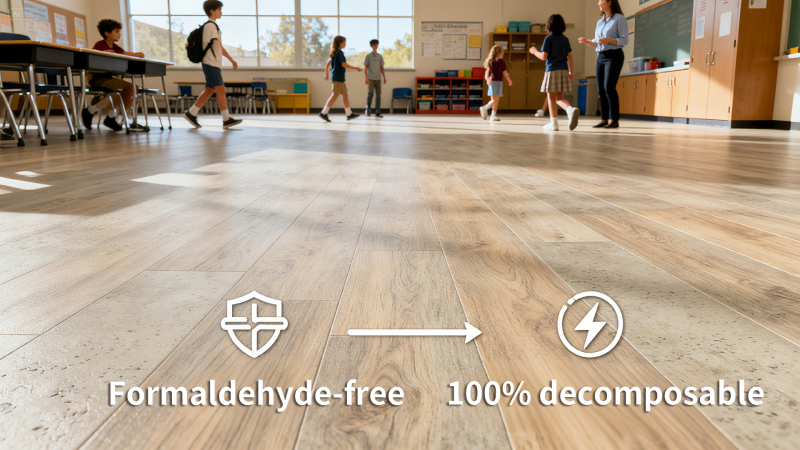
0 formaldehyde; 100% decomposable
|
Green buildings, schools (CALGreen priority)
|
Passes Prop 65 toxicity tests
|
3. California-Specific Selection Tool: 4-Step Decision Framework
This framework combines official regulations and regional data to eliminate guesswork.
Step 1: Define Your Space’s Priority Need
• Fire Safety First: Prioritize calcium sulphate or ventilated carbon steel for 60+ minute fire protection.
• Eco-Focus: Eco-cement composite or all-steel options work best for green building needs.
• Tech/ESD Needs: PVC-coated steel is the most cost-effective choice for anti-static requirements.
Step 2: Account for Regional Conditions
• Coastal Areas: Select ceramic-coated steel or all-steel (both suitable for humid, corrosive environments). Avoid eco-cement (absorbs moisture).
• Inland/Dusty Regions: Prioritize easy-clean surfaces (PVC-coated or ceramic) to reduce maintenance costs—California Air Resources Board (CARB) data shows inland dust can increase floor wear by 30%.
Step 3: Verify Manufacturer Compliance
Request key documents from any supplier: 1) Fire-resistance test report, 2) Toxicity statement (per Prop 65).
Step 4: Confirm Installation Requirements
Coastal installations may require moisture barriers to meet CBC Section 107.3.
4. Case Examples: California Commercial Projects
These examples align with the selection framework above.
Example 1: San Jose Data Center (2024)
• Need: Anti-static performance + seismic compliance (Zone 4).
• Choice: PVC-coated steel access floors.
• Outcome: Met anti-static requirements; passed CBC seismic testing. Maintenance costs reduced by 22% (vs. non-anti-static floors) in first year (per project post-inspection report).
Example 2: Los Angeles Green Office Tower (2025)
• Need: CALGreen compliance + coastal humidity resistance.
• Choice: All-steel (OA) floors + ceramic-coated steel in lobbies.
• Outcome: LEED v4.1 Gold certification; no corrosion issues after 6 months of coastal exposure (monthly humidity monitoring data: 65–70%).
Example 3: Sacramento Public School (2024)
• Need: Non-toxicity + eco-friendliness.
• Choice: Eco-cement composite floors.
• Outcome: 0 formaldehyde (Prop 65 compliant); 100% decomposable material aligned with school district’s “Green Campus” policy.
5. Future Trends: 2026 CBC Updates to Prepare For
The 2026 CBC draft (to be finalized Q1 2026) includes two key changes for access floors:
• Fire Rating Increase: Hospitals and healthcare facilities will require 120-minute fire resistance (up from 90 minutes).
• Eco-Upgrade: Higher recycled content priority for all structural access floor components.
6. References
• California State Building Standards Commission (CSBSC). (2024). 2022 California Building Code: Section 703.2.1. Sacramento: CSBSC.
• California Department of General Services. (2025). Commercial Access Floor Project Database. Sacramento: CDGS.
• CALGreen. (2025). 2025 California Green Building Standards Code: Section 5.403.2. Sacramento: California Energy Commission.