
How to Pick WPC Flooring That Handles Heat, Cold & Moisture—No More Warping or Mold
- Addtime: 2025-09-30 / View: 286
For homeowners, renters, and commercial space designers alike, choosing flooring that stands up to daily environmental shifts—like sweltering summer heat, cold winter drafts, or muggy bathroom humidity—can feel like a puzzle. Wood Plastic Composite (WPC) flooring has risen to fame for its durability and low maintenance, but many still wonder: Can it really handle extreme temperatures and moisture without warping, cracking, or fading?
In this guide, we’ll break down how WPC flooring interacts with temperature fluctuations and humidity changes, why it outperforms traditional materials like solid wood or tile in many scenarios, and how to choose and install it for long-lasting results—so you can make a confident choice for spaces like kitchens, basements, patios, or entryways.
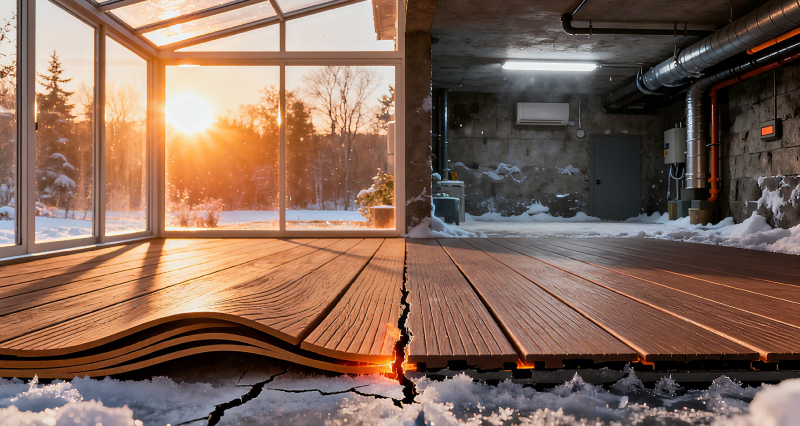
First: What Makes WPC Flooring Different from Other Options?
Before diving into environmental resistance, let’s clarify what WPC flooring is: a hybrid material made from wood fibers (for natural texture and warmth) and thermoplastic resins (such as HDPE or PP, for water resistance and strength), bound together through high-pressure manufacturing.
Unlike solid wood (which soaks up moisture) or tile (which can crack in extreme cold), WPC’s unique composition gives it built-in defenses against temperature and humidity shifts—though not all WPC products perform equally.
How WPC Flooring Handles Temperature Fluctuations
Temperature swings (think: a sun-drenched living room in summer vs. a chilly basement in winter) cause most flooring to expand or contract. Here’s how WPC flooring responds, plus why it’s more reliable than many alternatives:
1. Low Thermal Expansion Coefficient = Less Warping or Cracking
Every material expands when heated and contracts when cooled—but WPC flooring has a lower thermal expansion coefficient than solid wood, engineered wood, or even some vinyl options. This means it changes shape far less under temperature stress. For example:
• In hot climates (or near radiators/underfloor heating), WPC’s plastic components expand slightly but stay stable—no bulging or lifting at the edges, a common issue with solid wood.
• In cold temperatures (down to -40°C for high-quality WPC), it contracts minimally, avoiding the gaps or cracks that tile or laminate often develop.
Top-tier WPC brands (like Latitude or premium manufacturers) enhance this resistance by using evenly distributed wood fibers and high-grade polymers during production. This tight bonding prevents the material from splitting or warping, even when temperatures swing 50°C or more between seasons.
2. How to Maximize Temperature Resistance (Installation & Selection Tips)
While WPC is naturally tough against temperature shifts, proper choices and installation will lock in its performance:
• Acclimate the flooring first: Store WPC planks in your space for 48–72 hours before installation. This lets the material adjust to your home’s average temperature, reducing post-installation expansion or contraction.
• Leave expansion gaps: Even with low expansion, always leave 1–2mm gaps between planks and 5–8mm gaps along walls. This gives the flooring room to shift without buckling—critical for rooms with direct sunlight (like sunrooms) or underfloor heating.
• Choose “temperature-rated” WPC: Look for products labeled to withstand your climate (e.g., ‘-30°C to 60°C resistance’ for cold winters and hot summers). Avoid budget WPC with low-quality plastic, which may become brittle in extreme cold.
How WPC Flooring Handles Humidity Changes
Humidity (moisture in the air) is a silent flooring killer—think moldy carpet, warped hardwood, or stained tile grout. WPC flooring’s plastic core is its secret weapon here, but understanding its limits and proper care is key.
1. Water Resistance (But Not “100% Waterproof”—Here’s the Difference)
WPC flooring boasts strong moisture resistance, thanks to its plastic resin core. Unlike solid wood (which absorbs moisture and swells) or engineered wood (which can delaminate), WPC repels water on the surface and prevents deep penetration—making it ideal for:
• Bathrooms, kitchens, and laundry rooms (where spills and steam are common).
• Basements or crawl spaces (where humidity levels often hover above 60%).
• Outdoor covered patios (protected from heavy rain, but not standing water).
That said, “moisture-resistant” doesn’t mean “indestructible.” Prolonged exposure to standing water (e.g., a leaking pipe left unrepaired for weeks) can still seep into seams and cause minor swelling—especially in low-quality WPC with poor edge sealing.
2. Mold & Mildew Resistance: A Big Win for Humid Spaces
Humidity loves to feed mold and mildew, which ruin flooring and trigger allergies. WPC’s plastic core doesn’t provide a food source for mold, unlike wood (which mold eats) or carpet (which traps moisture). High-quality WPC also adds anti-microbial additives during production, further stopping mold growth in damp areas like shower surrounds or mudrooms.
3. How to Keep WPC Flooring Safe in High-Humidity Areas
To make the most of WPC’s humidity resistance, follow these steps:
• Seal seams (for wet zones): In bathrooms or outdoor spaces, use a WPC-compatible silicone sealant along plank edges to block water from seeping between gaps.
• Control indoor humidity: Use dehumidifiers in basements or poorly ventilated rooms to keep humidity between 30–50%—this reduces stress on the flooring and prevents minor swelling.
• Clean spills quickly: Wipe up water, juice, or soap spills within 1–2 hours. While WPC repels moisture, long-standing liquids can degrade edge adhesives over time.

WPC Flooring vs. Traditional Materials: A Quick Comparison
To help you see why WPC stands out for temperature and humidity resistance, here’s how it stacks up against common alternatives:
|
Flooring Type
|
Temperature Resistance
|
Humidity/Moisture Resistance
|
Best For
|
|
WPC Flooring
|
Low expansion; handles -40°C to 60°C (premium)
|
Repels moisture; mold-resistant
|
Bathrooms, basements, patios, kitchens
|
|
Solid Wood Flooring
|
High expansion; warps in heat/moisture
|
Poor—swells with humidity; prone to mold
|
Living rooms, bedrooms (low humidity)
|
|
Ceramic Tile
|
Resists heat; cracks in extreme cold
|
Water-resistant; grout traps mold
|
Bathrooms, kitchens (high maintenance)
|
|
Vinyl Flooring
|
Moderate expansion; softens in high heat
|
Water-resistant; thin core may curl in humidity
|
Entryways, playrooms (light use)
|
Which WPC Flooring Is Best for Your Space? (Match to Buying Scenarios)
Not all WPC flooring is created equal—your choice should align with how you’ll use the space and its environmental conditions:
1. For Patios/Outdoor Spaces (Extreme Temperatures + Rain)
Look for outdoor-rated WPC flooring with:
• UV stabilizers (prevents fading from sunlight).
• High-density plastic core (resists rain and temperature swings).
• Slip-resistant surface (safe for wet feet).
Example: A homeowner in Florida wants a patio floor that won’t fade in 90°F summer sun or warp during occasional cold snaps. Outdoor WPC with UV protection and -10°C to 65°C resistance is perfect.
2. For Basements (High Humidity + Cool Temperatures)
Choose moisture-sealed WPC flooring with:
• Anti-microbial additives (stops basement mold).
• Thick core (at least 6mm) for stability in cool air.
Example: A family finishing their basement needs flooring that handles dampness from the concrete slab. Sealed WPC with dehumidifier compatibility checks all boxes.
3. For Bathrooms/Laundries (Steam + Spills)
Opt for waterproof-edge WPC flooring with:
• Tongue-and-groove locking systems (blocks water between planks).
• Silicone-sealed edges (extra protection against shower steam).
Example: A renter updating their bathroom wants low-maintenance flooring that won’t damage the subfloor. Waterproof-edge WPC avoids mold and requires no grout.
Final Tips for Long-Lasting WPC Flooring
To ensure your WPC flooring handles temperature and humidity changes for 15–20 years (its typical lifespan):
• Avoid direct heat sources: Keep planks at least 30cm away from radiators, fireplaces, or space heaters—extreme direct heat can soften the plastic core.
• Clean gently: Use a damp mop with mild detergent (avoid harsh chemicals like bleach, which break down the plastic).
• Inspect yearly: Check for loose planks or edge damage, especially in high-humidity areas. Fix small issues early to prevent bigger problems.
WPC flooring isn’t just a “trendy” choice—it’s a practical solution for spaces where temperature and humidity shift daily. By understanding how it resists environmental stress and matching it to your space’s needs, you’ll get a floor that looks great and performs even better—no more worrying about warping, mold, or costly replacements.
Ready to upgrade? Start by measuring your space and checking local climate ratings for WPC products—your perfect floor is just a few steps away.