
Which Anti-Static Raised Floor Fits My Data Center? Save My Cooling Bills & Reduce Downtime
- Addtime: 2025-10-10 / View: 261
In today’s data-driven world, data centers face dual pressures: soaring energy bills and the need to protect sensitive equipment. Anti-static raised floor panels—engineered for high-performance, industry-specific demands—are not just infrastructure additions, but strategic solutions to solve pain points like cold air waste, electrostatic damage (ESD), and costly downtime.
Below’s how these panels enhance efficiency, simplify decision-making, and align with diverse data center scenarios, with insights from specialized providers like CWWIN that tailor designs to professional needs.
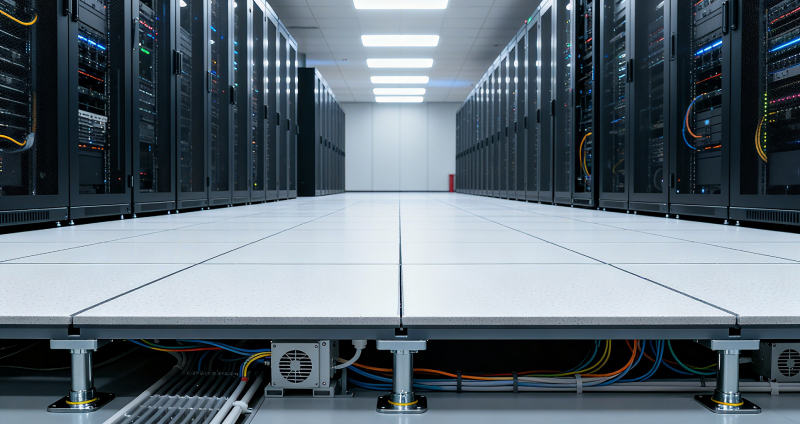
1. Solve Cold Air Leakage: Ventilated Panels for Targeted Cooling
A major energy drain in data centers is **cold air bypass**—when cooled air never reaches server intakes, forcing HVAC systems to overwork. Ventilated anti-static raised floor panels, such as those in CWWIN’s product lineup, address this with precision:
Crafted from imported carbon steel and reinforced with thickened steel tubes, these panels balance two critical needs:
• High Load-Bearing & Air Output: The robust structure supports heavy server racks while maintaining large air output, ensuring cold air is evenly distributed to equipment intakes (critical for preventing hotspots).
• Sealed Airflow Control: Pairing these panels with gap-sealing solutions (for cable openings or edges) minimizes leakage. When placed strategically near server racks, airflow waste is reduced by up to 6%—slashing cooling system strain.
This design is ideal for data centers, communication rooms, and switch rooms where centralized pipeline laying and air circulation are non-negotiable—exactly the scenarios such specialized panels are built for.
2. Slash Cooling Costs: Panels That Support Hot/Cold Aisle Strategies
Cooling typically accounts for 30-40% of a data center’s total energy use. Anti-static raised floor panels—including ventilated, calcium sulphate, and ceramic access variants—enable game-changing efficiency strategies, with designs like CWWIN’s that prioritize compatibility:
• Hot/Cold Aisle Containment Readiness: Panels with tight-sealing, rigid structures (e.g., calcium sulphate cores encased in galvanized steel) eliminate “air mixing” (a top cause of overcooling). This setup reduces energy consumption by up to 15% compared to traditional layouts.
• Higher Supply Air Temperatures: Precision-engineered ceramic access panels (made with tensile steel and hard steel sheets) maintain stability even at elevated cold air temperatures (e.g., 18°C to 22°C). Every 1°C increase cuts cooling energy use by 2-3%.
• Free Cooling Compatibility: The underfloor plenum created by raised panels provides a stable pathway for outside air—perfect for data centers in moderate climates leveraging free cooling, aligning with sustainability goals.
3. Prevent Costly ESD Damage: Panels Built for Global Standards
ESD can fry servers, corrupt data, or cause unplanned downtime—costing businesses thousands. Anti-static raised floor panels designed to meet standards like ANSI/ESD S20.20 eliminate this risk, with specialized options for different needs:
• Permanent Anti-Static Protection: Steel-core panels with PVC coverings (a design featured in CWWIN’s anti-static series) use a plastic particle interface to form a durable electrostatic network, requiring no periodic re-treatment—ideal for program-controlled machine rooms.
• High-Sensitivity Environments: Ceramic access panels (with all-steel, spot-welded shells) enable rapid static dissipation, suitable for AI server rooms or storage facilities with delicate components (e.g., GPUs).
• Extreme Safety Requirements: Calcium sulphate core panels, with fire-resistant and high-temperature-resistant crystal structures, add protection for data centers with strict demands (e.g., military command centers, financial server rooms).

4. Simplify Maintenance: Cable-Friendly Designs
Cluttered cables slow down upgrades, increase hazards, and trap heat—hurting efficiency. Anti-static raised floor systems turn underfloor space into an organized pathway, thanks to user-centric features:
• Modular Wiring Flexibility: All-steel modular panels (often with corner lock holes for stability) separate strong and weak currents, preventing interference. Technicians can lift panels quickly to access cables, cutting upgrade time by 30% and minimizing downtime.
• Eco-Friendly Threading: For sustainability-focused data centers, panels made with green, imported technology (like CWWIN’s cement series, developed from Korean tech) include built-in threading holes. This eliminates extra cable trays, reducing waste while keeping spaces neat.
5. Fit Any Data Center: Scenario-Tailored Variants
Anti-static raised floor panels aren’t one-size-fits-all—they’re optimized for different data center types, budgets, and requirements, with examples from leading providers:
|
Data Center Type
|
Recommended Panel Variant
|
Key Benefits
|
|
New Greenfield Builds
|
Ceramic Access Panels / Calcium Sulphate Panels
|
– Ceramic: High load-bearing (supports dense racks) and easy cleaning.<br>- Calcium Sulphate: Waterproof, fire-resistant, compatible with smart airflow sensors.
|
|
Old Data Center Retrofitting
|
Modular All-Steel Panels / Lightweight Steel-Core Panels
|
– Modular: No major demolition, cutting retrofitting costs by 25%.<br>- Lightweight: Durable for upgrades without reinforcing structures.
|
|
Edge Data Centers
|
Compact Ventilated Panels
|
Balances small-space fit (e.g., retail backrooms) with consistent air output—critical for edge device cooling.
|
|
Budget-Conscious SMBs
|
Economy Steel-Core PVC Panels
|
Permanent anti-static protection eliminates re-treatment costs; 2-3 year payback period.
|
6. Get Clear ROI: Long-Term Savings from Durable Designs
While anti-static raised floors require an initial investment, their durability, efficiency, and low maintenance drive long-term savings:
• Cooling Cost Cuts: Ventilated and ceramic panels reduce annual cooling expenses by 15-20%. For a 10,000 sq ft data center, this translates to $15,000-$30,000 in yearly savings.
• Extended Equipment Life: ESD protection and targeted cooling extend server lifespans by 2-3 years, delaying costly replacements.
• Lower Downtime Costs: Easy-to-maintain designs reduce downtime from 9 hours/year to 2 hours/year. With Gartner estimating $7,000-$10,000 in losses per hour, this saves up to $70,000 annually.
Why Anti-Static Raised Floors Are Non-Negotiable
For data centers of any size—from edge facilities to high-security command centers—specialized anti-static raised floor panels solve critical pain points: they stop energy waste, protect equipment, and adapt to growth. When choosing panels, focus on three non-negotiables tied to professional needs:
1.ANSI/ESD Compliance: Avoid equipment damage with standard-aligned designs.
2.Load Capacity Matching: Pair rack weight with panels rated for heavy, moderate, or light use.
3.Airflow Compatibility: Opt for ventilated variants if free cooling or hot/cold aisles are part of your strategy.
These panels aren’t just infrastructure—they’re an investment in long-term efficiency, reliability, and cost savings, backed by providers that understand data center demands.