
Why Is Waterproof LVT Easier to Maintain Than Tile in Moist Areas? (For Families & Restaurants)
- Addtime: 2025-09-26 / View: 223
When it comes to flooring in moisture-prone spaces—like bathrooms, kitchens, basements, or commercial areas with high humidity (e.g., restaurants, gym locker rooms, data centers)—choosing the right material is only half the battle. The other critical factor? Understanding how to maintain it to avoid warping, mold, or premature wear.
Among popular options, waterproof Luxury Vinyl Tile (LVT) stands out for its resilience, but its maintenance needs differ significantly from other common flooring types (such as hardwood, ceramic tile, VCT, and laminate). Below, we break down these key differences, focusing on practical, actionable steps—while highlighting how one-stop flooring solutions (including complementary products like anti-static or ventilated flooring) can simplify both selection and long-term care for any space.
1. First: What Makes Waterproof LVT Unique in Moisture-Prone Spaces?
Before diving into maintenance, it’s important to clarify why waterproof LVT is a go-to for damp areas. Unlike “water-resistant” flooring (which repels spills but can fail under prolonged moisture), waterproof LVT features a dense, non-porous core (often made of stone-plastic composite, or SPC) and tight, click-lock seams that block water from seeping into subfloors. This structural advantage directly shapes its maintenance needs: it requires less “defensive” care (e.g., sealing, frequent drying) compared to materials that absorb moisture.
For commercial spaces with specialized needs—such as data centers or server rooms that require both moisture resistance and static control (anti-static protection), or mechanical rooms where airflow is critical—waterproof LVT can be paired with complementary solutions.
For example, in spaces where subfloor moisture buildup is a long-term risk (like below-grade server rooms), combining waterproof LVT with ventilated flooring creates a dual-layer defense: the LVT blocks surface moisture, while the ventilated understructure promotes air circulation to prevent trapped dampness. This pairing eliminates the hassle of coordinating multiple vendors and reduces maintenance needs for both components.
2. Maintenance Differences: Waterproof LVT vs. Other Flooring Types
To help you quickly compare, we’ve organized the key maintenance requirements for waterproof LVT against four common alternatives in moisture-prone environments. Each section highlights “what you need to do” and “why it matters”—addressing the practical questions users often ask (e.g., “Do I need to seal LVT?” “Can I use a steam mop on ceramic tile?”).
A. Waterproof LVT vs. Solid Hardwood
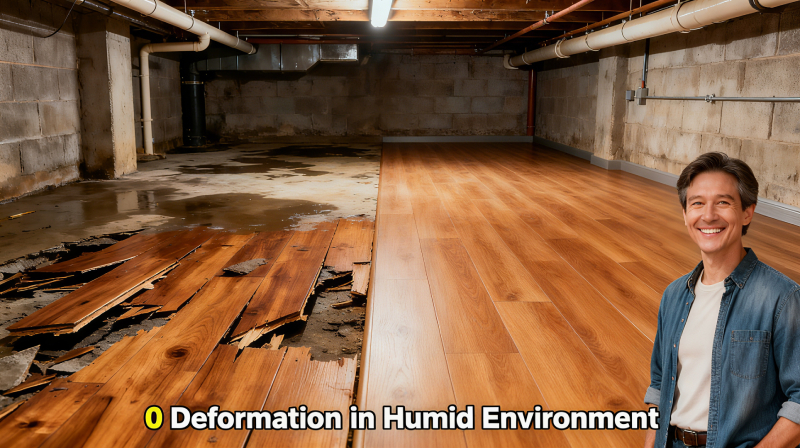
Solid hardwood is a classic choice but notoriously moisture-sensitive—it swells, warps, or rots when exposed to dampness. Its maintenance needs are far more demanding than waterproof LVT:
|
Aspect
|
Waterproof LVT
|
Solid Hardwood
|
|
Daily Cleaning
|
Use a microfiber mop or soft-bristle broom; wipe spills immediately with a dry cloth. No need for harsh cleaners—pH-neutral solutions work best.
|
Sweep daily (avoid wet mops!); wipe spills within 10 minutes to prevent absorption. Never use water-based cleaners (they damage the finish).
|
|
Periodic Maintenance
|
Deep clean every 3–6 months with a LVT-specific cleaner (avoid steam mops, which can loosen seams). No sealing or refinishing required. If you pair it with ventilated flooring, check understructure airflow annually (no disassembly needed—simple visual inspection of vents suffices).
|
Refinish (sand and reapply polyurethane) every 3–5 years to maintain the moisture barrier. Even with refinishing, it’s not recommended for bathrooms/basements—ventilated flooring can’t offset hardwood’s inherent moisture sensitivity.
|
|
Moisture-Specific Care
|
No extra sealing—its core and seams block water. Ensure subfloors are dry (RH < 85%) before installation, then relax.
|
Install a thick moisture barrier under the floor; use dehumidifiers to keep indoor humidity 35–55%. Avoid placing near sinks/showers.
|
Key Takeaway: Waterproof LVT eliminates the “race against time” with spills and skips the costly refinishing that hardwood demands. For homes or offices, this means less disruption—and when you pair it with ventilated flooring in high-humidity zones (like basement offices), it adds an extra layer of moisture protection with minimal added maintenance.
B. Waterproof LVT vs. Ceramic Tile
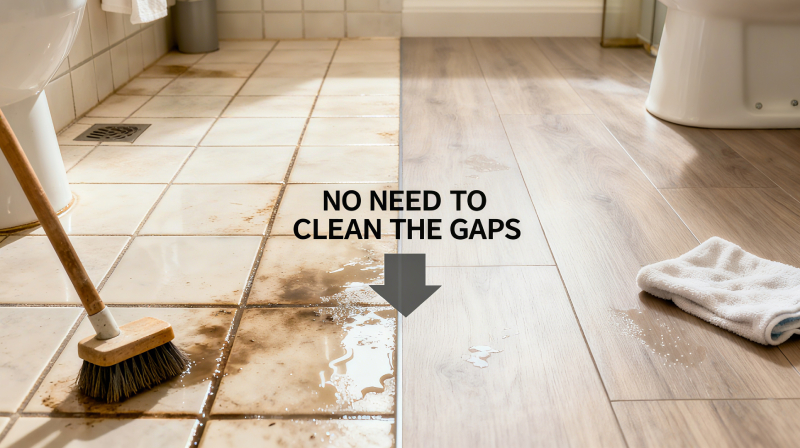
Ceramic tile is water-resistant and durable, but its grout lines are a hidden weakness (they absorb moisture and harbor mold). Maintenance focuses on grout care, which waterproof LVT avoids:
|
Aspect
|
Waterproof LVT
|
Ceramic Tile
|
|
Daily Cleaning
|
Wipe spills with a damp cloth; mop with mild cleaner. No grout to scrub.
|
Wipe spills quickly (grout absorbs moisture!); mop with pH-neutral cleaner, but scrub grout lines weekly with a stiff brush to prevent mold.
|
|
Periodic Maintenance
|
No grout sealing—just deep clean with LVT-friendly products every 3–6 months. If you use it with ventilated flooring, clear vent openings of dust quarterly to maintain airflow.
|
Reseal grout every 1–2 years (more often in showers). Replace cracked grout immediately to stop water from seeping to subfloors. Ventilated flooring under ceramic tile requires more frequent checks—grout cracks can let water reach the understructure, demanding annual underfloor inspections.
|
|
Moisture-Specific Care
|
Tight seams prevent water penetration—no extra steps needed post-installation.
|
Use a silicone caulk around tubs/sinks to seal gaps between tile and fixtures. Avoid steam mops on unglazed tile (they can damage grout).
|
Key Takeaway: Ceramic tile requires ongoing grout maintenance to stay moisture-proof, while waterproof LVT’s seamless design cuts down on weekly scrubbing. For commercial spaces like restaurant kitchens or gym locker rooms—where both surface moisture and subfloor dampness are risks—pairing waterproof LVT with ventilated flooring means less time spent on underfloor checks compared to ceramic tile setups.
C. Waterproof LVT vs. Vinyl Composition Tile (VCT)
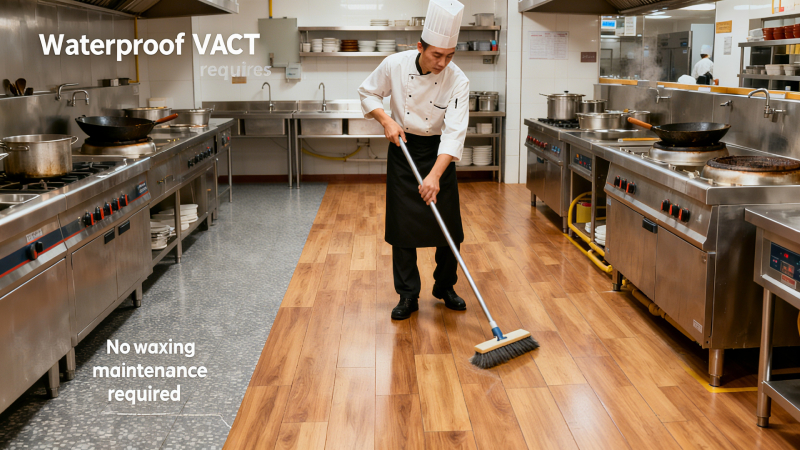
VCT is common in commercial spaces (e.g., offices, schools) but is *water-resistant*, not waterproof. Its porous surface and adhesive reliance make maintenance more labor-intensive than waterproof LVT:
|
Aspect
|
Waterproof LVT
|
VCT
|
|
Daily Cleaning
|
Mop with mild cleaner; avoid excessive water. No wax needed.
|
Sweep daily; mop with VCT-specific cleaner (avoid harsh chemicals that strip wax). Wipe spills immediately—adhesive weakens with moisture.
|
|
Periodic Maintenance
|
No waxing or buffing—just deep clean with LVT cleaners. If you pair it with ventilated flooring, inspect vent covers annually (no disassembly required).
|
Strip old wax and reapply 2–3 coats every 6–12 months (more in high-traffic areas). Buff regularly to maintain shine and moisture resistance. VCT + ventilated flooring demands extra care: adhesive failure can let water seep under tiles, requiring quarterly underfloor moisture tests.
|
|
Moisture-Specific Care
|
Seams lock out water—no adhesive maintenance after installation.
|
Install a moisture barrier under VCT; check for loose tiles quarterly (moisture weakens adhesive). Avoid use in showers or poolsides.
|
Key Takeaway: Waterproof LVT skips VCT’s frequent waxing and adhesive checks. For property managers overseeing multiple buildings (like school campuses or office parks), pairing waterproof LVT with ventilated flooring in damp zones (e.g., basement classrooms) simplifies maintenance—fewer underfloor inspections and no waxing mean lower operational costs.
D. Waterproof LVT vs. Laminate
Laminate is affordable but only “water-resistant” (its fiberboard core swells when wet). Maintenance is a balance of “quick action”—unlike waterproof LVT, which buys you time:
|
Aspect
|
Waterproof LVT
|
Laminate
|
|
Daily Cleaning
|
Wipe spills with a damp cloth; mop with mild cleaner. No fear of core damage.
|
Wipe spills within 5 minutes (core absorbs water fast!); use a dry mop—never wet mops.
|
|
Periodic Maintenance
|
Deep clean every 3–6 months with LVT cleaners. No refinishing. If you pair it with ventilated flooring, it only needs annual vent dusting.
|
Avoid deep cleaning with water; use laminate-specific dry cleaners. Once swollen, it can’t be fixed—replace damaged planks. Laminate + ventilated flooring is high-risk: even small spills can reach the understructure, requiring frequent underfloor checks to prevent mold.
|
|
Moisture-Specific Care
|
Safe for basements/bathrooms (as long as subfloors are dry). Pair with ventilated flooring for below-grade spaces to reduce subfloor moisture risk.
|
Not recommended for moisture-prone areas—even with a moisture barrier and ventilated flooring, it’s high-risk.
|
Key Takeaway: Waterproof LVT eliminates the “spill panic” of laminate. For families or small businesses using below-grade spaces (like basement workshops), pairing waterproof LVT with ventilated flooring adds an extra layer of moisture protection without the frequent checks needed for laminate setups.
3. Why Waterproof LVT’s Maintenance Advantages Matter for Your Space
The right flooring should fit *how you live or work*—not the other way around. Waterproof LVT’s low-maintenance profile aligns with key user priorities in moisture-prone areas, and pairing it with complementary products like ventilated flooring amplifies these benefits by addressing specific space needs:
• For Homeowners: Spend less time scrubbing grout or refinishing floors, and more time using spaces like basements or bathrooms without worry. In below-grade rooms, waterproof LVT + ventilated flooring means no more stress about subfloor dampness—annual vent checks are all it takes to keep the setup protected.
• For Commercial Owners: Reduce cleaning labor costs (no waxing, grout scrubbing, or frequent repairs) and minimize downtime. In spaces like data centers or mechanical rooms, waterproof LVT blocks surface moisture while ventilated flooring promotes airflow—both require minimal maintenance, so your team can focus on core operations.
• For Property Managers: Attract tenants with durable, low-maintenance floors that hold up to moisture and foot traffic. Waterproof LVT + ventilated flooring in damp zones (like apartment building basements) reduces maintenance requests and extends the life of the flooring, protecting your investment.
4. Pro Tips to Maximize Waterproof LVT’s Lifespan (Including Ventilated Flooring Pairings)
While waterproof LVT is low-maintenance, these simple steps—curated from industry experts who handle everything from installation to long-term care—will keep it looking and performing its best, even when paired with ventilated flooring:
1. Pre-Installation Prep (Critical!): Test subfloor moisture (RH < 85%) and fix unevenness—this prevents seam damage later. For ventilated flooring pairings, ensure the understructure’s vent openings are aligned with room airflow (avoid blocking vents with furniture) to maintain dampness control.
2. Daily Habits: Place mats at entryways to trap dirt (abrasive particles scratch LVT) and wipe up standing water (e.g., from showers) with a dry cloth. For spaces with ventilated flooring, avoid vacuuming vent openings with harsh brushes—use a soft dusting attachment to prevent damage.
3. Avoid Harmful Tools: Skip steam mops (heat loosens seams) and abrasive scrubbers (they damage the wear layer). For ventilated flooring, never use heavy equipment (like floor buffers) over vent covers—this can crush the understructure and block airflow.
4. Address Issues Early: If seams start to lift (rare, but possible), contact a professional to reseal them—this prevents moisture from seeping in. For ventilated flooring pairings, if you notice reduced airflow from vents, clear dust or debris immediately to avoid subfloor dampness buildup.
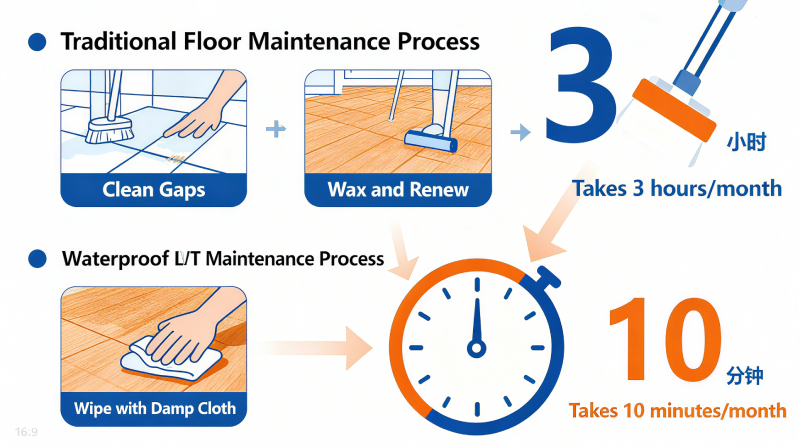
In moisture-prone environments, flooring maintenance shouldn’t be a chore—and neither should finding the right combination of products for your space. Waterproof LVT stands out because it eliminates the most tedious tasks required by other materials, and pairing it with solutions like ventilated flooring adds targeted protection without extra hassle.
Whether you’re upgrading your home’s basement, outfitting a commercial data center, or choosing floors for a rental property, focusing on low-maintenance, complementary flooring combinations ensures your space stays protected, durable, and easy to care for. This approach saves time, reduces stress, and ensures your flooring investment lasts for years.
For high-quality waterproof LVT solutions tailored to moisture-prone spaces (from residential to commercial), we recommend you partner with a trusted provider that prioritizes durability and ease of care. This ensures all components work together seamlessly, with maintenance needs that fit your lifestyle or operational schedule.