High-traffic commercial areas—whether it’s the lobby of a busy office building, the dining floor of a popular restaurant, the corridor of a hospital, or the checkout zone of a retail store—demand flooring that balances durability, professional aesthetics, and low-maintenance practicality.
When narrowing down options for commercial spaces, three choices stand out: LVT (Luxury Vinyl Tile) Flooring, Solid Hardwood Flooring, and Ceramic Tiles. But how do they perform from upfront investment planning to years of heavy daily use?
This guide breaks down their suitability for high-traffic commercial scenarios, eases the “which to pick” decision, and aligns with what business owners, facility managers, and contractors really search for when selecting flooring that supports operational efficiency and brand image.
First: What Makes Flooring “Commercial High-Traffic Ready”?
Before comparing options, let’s define the non-negotiables for commercial high-traffic areas. The ideal flooring must handle:
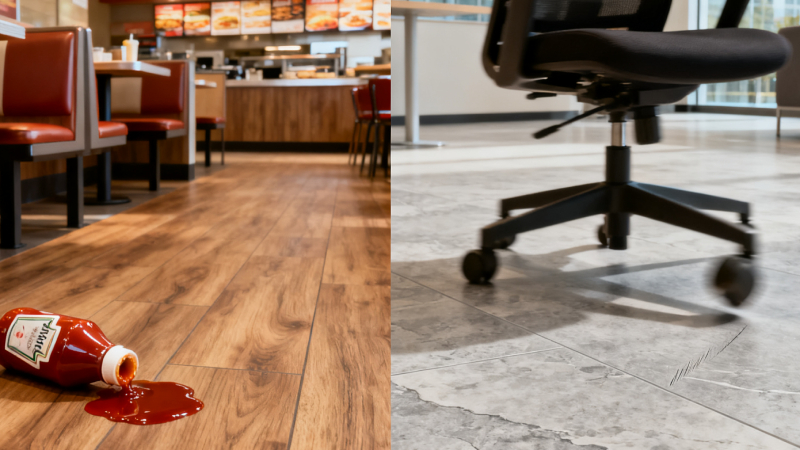
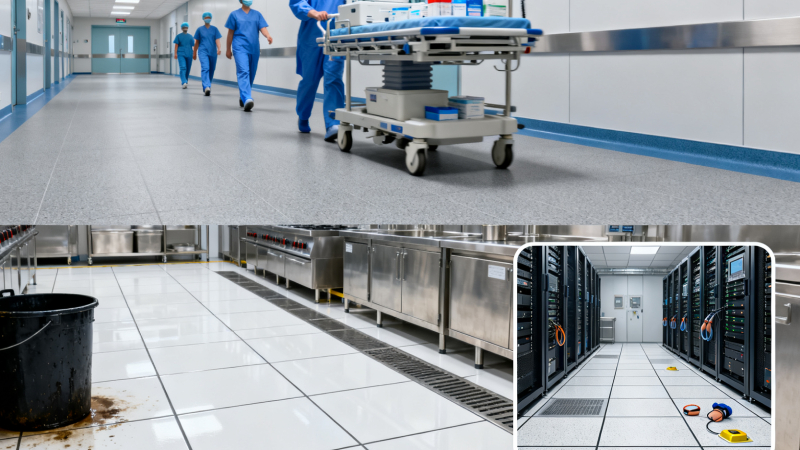
• Constant foot traffic (from employees, customers, patients, or delivery personnel) and wheeled traffic (shopping carts, medical trolleys, office chairs) without visible wear.
• Spills (coffee, food, cleaning chemicals) and moisture (rain tracked in, steam from commercial kitchens) without damage.
• Quick, routine cleaning to maintain hygiene standards (critical for healthcare, food service, and retail) and minimize operational downtime.
• Longevity that justifies the investment, avoiding frequent replacements that disrupt business.
• Whether you’re outfitting a new retail space, renovating a hospital wing, or upgrading an office lobby, these three flooring types each have strengths—but they fit different commercial needs. Let’s break them down.
1. LVT Flooring: The “Workhorse” for Versatile Commercial Spaces
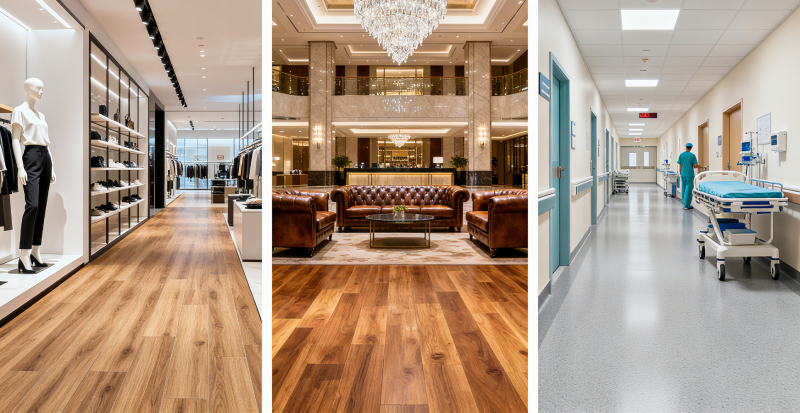
LVT has become a top choice for commercial high-traffic areas, thanks to its ability to mimic high-end materials (hardwood, stone) while delivering industrial-grade durability. For businesses prioritizing resilience, style, and cost-efficiency, CWWIN Floor’s SPC/WPC LVT series is tailored to meet commercial demands—from busy retail floors to office break areas.
Initial Investment: Flexible for Commercial Budgets
LVT’s upfront cost adapts to diverse commercial budgets, making it accessible for small businesses (like local cafes) and large enterprises (like chain retail stores) alike. What matters most is *value*: even mid-range LVT avoids a “cheap” look, with realistic wood or stone patterns that align with brand aesthetics. CWWIN’s budget-friendly LVT lines work for spaces like convenience store checkout zones, while its premium commercial-grade LVT suits upscale boutique lobbies—both delivering durability without overspending.
Why It Shines in Commercial High-Traffic Areas (Plus CWWIN’s Edge)
• Heavy-wear resistance: Most commercial LVT includes a thick wear layer with UV coating, but CWWIN’s SPC LVT goes further—using enhanced, high-density stone-plastic composite and PVC wear layers that stand up to daily scuffs from shoe soles, shopping carts, and rolling office chairs. This durability ensures floors maintain a polished look even under consistent, high-volume foot traffic.
• 100% waterproof for commercial spills: Unlike hardwood, LVT won’t swell or warp from coffee spills in office lobbies, food splatters in fast-casual restaurants, or rain tracked into entryways. CWWIN’s WPC LVT adds an extra moisture barrier, making it ideal for restaurant dining areas and hotel foyers—spaces where spills are unavoidable and quick cleanup is essential.
• Low maintenance, minimal downtime: Commercial cleaning teams can keep LVT tidy with a quick sweep and damp mop (no harsh chemicals needed). CWWIN’s LVT has a stain-resistant surface—wiping up ketchup, ink, or cleaning fluids leaves no trace. No refinishing or sealing required, so businesses avoid closing spaces for maintenance or touch-ups.
• Adaptable installation for commercial layouts: CWWIN’s LVT supports both glue-down (secure for high-traffic zones like mall corridors) and click-lock (faster to install for quick store renovations) methods. If a single plank is damaged (e.g., from a dropped tool in a hardware store), it can be replaced individually—no need to redo entire sections, saving time and money on repairs.
Best For Commercial Spaces:
• Retail stores (boutiques, convenience stores, mall kiosks)
• Fast-casual restaurants and café dining areas
• Office lobbies, break rooms, and open workspaces
• Hotel foyers and conference rooms