
High-Traffic SPC Flooring: Best Protective Underlayment (For Budgets, Homes & Commercial Use
- Addtime: 2025-09-26 / View: 226
SPC (Stone Plastic Composite) vinyl plank flooring has become a top pick for high-traffic zones like entryways, living rooms, kitchens, and commercial spaces (such as retail lobbies, bank halls, or data centers)—thanks to its exceptional durability, water resistance, scratch-proof properties, and compatibility with specialized needs (like anti-static requirements).
But a common question lingers for homeowners and business owners alike: Do you really need a protective underlayment for SPC flooring in these busy areas? The answer depends on your subfloor condition, comfort goals, long-term performance expectations, and even the specific type of SPC flooring you choose—and understanding the “why” behind the choice can help you make a decision that protects your investment for years.
First: What Makes High-Traffic Zones Different for SPC Flooring?
Before diving into underlayment, let’s clarify what “high-traffic zones” demand from flooring. These spaces see constant foot traffic (think kids running, pets pacing, or customers walking), frequent furniture/equipment movement (chairs sliding, service carts rolling, server racks being adjusted), and occasional impacts (dropped dishes, heavy bags, or tool boxes). For SPC flooring—even with its tough stone-plastic core—these factors can:
• Amplify noise (footsteps, equipment scrapes) that travels to lower floors or disturbs adjacent spaces (like offices next to retail areas);
• Expose small subfloor flaws (dips, cracks) over time, leading to uneven wear or plank damage—especially critical for commercial spaces where flooring issues affect brand image;
• Reduce underfoot comfort (SPC’s rigid core feels hard during long periods of standing, like in kitchens or checkout counters);
• Trap moisture (if the subfloor is concrete or prone to humidity, even minor leaks can seep in, risking mold or plank warping).
A protective underlayment addresses these pain points—but it’s not a “one-size-fits-all” requirement. Let’s break down when it’s necessary, what to choose, and how it aligns with your space’s unique needs (including specialized SPC flooring uses).
Do You Need Underlayment for SPC Flooring in High-Traffic Zones? 3 Key Factors to Consider
SPC flooring often comes with a built-in underlayment layer (usually foam or felt) designed for basic cushioning and sound absorption. But in high-traffic areas—especially commercial or specialized spaces—this built-in layer may not be enough. Here’s how to decide:
1. Your Subfloor Type: The Foundation of Durability
The subfloor is the unsung hero of flooring performance—and high traffic amplifies its flaws.
• Concrete subfloors: Non-negotiable for underlayment. Concrete retains moisture (even in dry climates) and often has tiny cracks or uneven spots. A moisture-resistant underlayment (with a polyethylene film barrier) prevents water from seeping into SPC’s core—critical for spaces like basements, kitchens, or data centers where humidity or accidental spills are common.
A dense foam or rubber layer also smooths out imperfections, avoiding plank stress. Without it, moisture can cause mold growth or warping—costly to repair in busy spaces where downtime is a problem.
• Wood subfloors: Recommended for underlayment. Wood subfloors can creak, shift, or have minor gaps. A thin, rigid underlayment (like cork or high-density foam) reduces creaking (important for quiet office environments), distributes weight evenly (key for furniture or equipment movement), and adds a buffer against scratches from subfloor splinters.
• Existing flooring (e.g., old vinyl or tile): Optional but beneficial. If you’re installing SPC over smooth, intact existing flooring, a thin underlayment (2mm-3mm) still adds sound absorption and comfort—without raising the floor height too much (critical for doorways or transitions, especially in commercial buildings with strict height requirements).
2. Noise Reduction: A Must for Multi-Level or Noise-Sensitive Spaces
High-traffic zones are noisy by nature—and SPC’s rigid core can make that noise worse (footsteps echo, chairs scrape loudly). If your space is:
• A second-floor living room above a bedroom;
• A restaurant dining area or retail store (where customers’ noise affects staff or neighboring businesses);
• An office or data center (where quiet is essential for focus or equipment operation);
• A home with young kids or pets (constant movement = constant sound);
A protective underlayment with sound-dampening properties is essential. Look for underlayment labeled with an STC (Sound Transmission Class) rating of 25+ or **IIC (Impact Insulation Class) rating of 50+**—these metrics measure how well it blocks airborne and impact noise. Cork or rubber underlayment works best here: cork naturally absorbs sound, while rubber deadens impacts (perfect for heavy foot traffic or rolling equipment).
3. Long-Term Comfort & Flooring Lifespan (Including Specialized SPC Floors)
SPC flooring is durable, but it’s not soft— and specialized SPC floors (like anti-static or load-bearing variants) often have extra rigidity to meet functional needs. In high-traffic zones where you stand for hours (e.g., kitchen islands, commercial checkout counters) or use heavy equipment (e.g., server racks on anti-static SPC floors), a underlayment adds much-needed cushioning. This isn’t just about comfort—it also protects your flooring:
• A buffer layer reduces stress on SPC planks from heavy foot traffic or equipment weight, preventing premature wear on the vinyl wear layer (or anti-static coating, in specialized floors);
• It absorbs shock from dropped objects (like a cast-iron pan in the kitchen or a tool in a data center), lowering the risk of plank cracking;
• For commercial spaces, it improves customer/employee experience (softer floors feel more welcoming) and reduces fatigue—key for staff who stand all day.
The Best Underlayment for SPC Flooring in High-Traffic Zones: 3 Top Picks (Including Commercial/Specialized Use)
Not all underlayment is designed for busy or specialized spaces. Prioritize these three types for durability, performance, and compatibility with standard and specialized SPC flooring (like anti-static or calcium sulphate SPC floors):
|
Underlayment Type
|
Key Benefits for High-Traffic Zones
|
Ideal Scenarios (Including CWWIN Floor Use Cases)
|
|
High-Density Foam (HDF)
|
Affordable, lightweight, easy to install; offers basic sound absorption and cushioning; resistant to mold and mildew.
|
Residential high-traffic zones (entryways, living rooms); budget-friendly commercial projects (small retail shops); pairs well with standard SPC floors.
|
|
Cork
|
Excellent sound insulation (STC 28+, IIC 52+); naturally antimicrobial (prevents mold); adds soft underfoot feel; eco-friendly (sustainable material).
|
Homes with kids/pets, multi-level living spaces, or offices (where quiet is key); compatible with CWWIN’s standard SPC floors for residential/commercial use.
|
|
Rubber
|
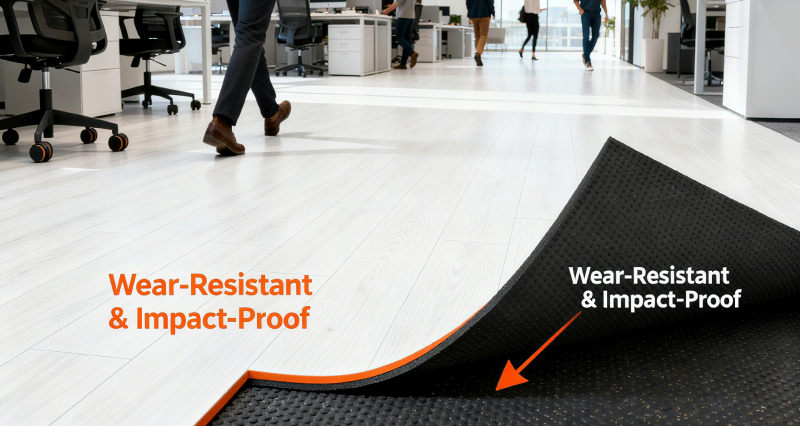
Ultra-durable (stands up to heavy foot traffic, rolling equipment, and weight); superior impact absorption (IIC 55+); 100% moisture-resistant; long lifespan (10+ years); non-abrasive (won’t damage anti-static coatings).
|
Commercial spaces (retail stores, offices, data centers); basements (moisture-prone + high traffic); perfect match for CWWIN’s Calcium Sulphate Anti-Static Flooring (used in banks, data centers) and load-bearing SPC floors—enhances moisture resistance and impact absorption, while complementing the floor’s anti-static and weight-support advantages.
|
Pro Tip: Avoid thin, low-density foam underlayment (less than 3mm) in high-traffic zones—it will compress over time and lose its effectiveness. Look for underlayment with a thickness of 3mm-5mm (thicker = better cushioning, but don’t exceed 5mm—too thick can cause SPC planks to shift, especially for interlocking designs).
When You Don’t Need Extra Underlayment for SPC in High-Traffic Zones
There are rare cases where an extra underlayment isn’t necessary— but only if all three of these apply:
1.Your SPC flooring has a thick, high-quality built-in underlayment (1.5mm+ foam or felt) with STC/IIC ratings for high traffic (check product specs—CWWIN’s premium SPC lines may include this);
2.Your subfloor is perfectly smooth, dry, and level (professionally inspected, no cracks or dips)—critical for specialized floors like anti-static SPC, which require precise subfloor conditions;
3.You don’t care about extra comfort or noise reduction (e.g., a garage mudroom where you only walk through briefly, or a storage room with minimal foot traffic).
Even then, adding a thin (2mm) underlayment is a low-cost way to extend your flooring’s lifespan—think of it as insurance for high-traffic wear, especially for expensive specialized floors.
Invest in Underlayment for SPC Flooring in High-Traffic Zones
For most homeowners and business owners—especially those using specialized SPC flooring like CWWIN’s Calcium Sulphate Anti-Static Flooring or commercial-grade SPC—a protective underlayment isn’t just an “extra”—it’s a necessity.
It safeguards against moisture, reduces noise, adds comfort, and extends your flooring’s lifespan—all while keeping your space functional, safe, and aligned with your needs (whether that’s quiet for an office or anti-static protection for a data center).
Whether you’re renovating a kitchen, updating a retail store, or outfitting a data center, the right underlayment turns SPC flooring from “durable” to “durable and high-performing.” For personalized recommendations, consider your subfloor type, noise concerns, space use, and the specific SPC flooring you choose (CWWIN’s team can help match underlayment to their anti-static, calcium sulphate, or standard SPC lines).
Ready to upgrade your high-traffic zone with SPC flooring and the right underlayment? Look for products that meet industry standards (STC/IIC ratings, moisture resistance) and work with your space’s unique needs—your floors (and your investment) will thank you.