
Waterproof Scratch-Resistant LVT Flooring: How It Saves Money vs. Hardwood, Laminate & Tile
- Addtime: 2025-09-29 / View: 258
Understanding “Cost” Beyond the Price Tag: Why LVT Stands Out for Smart Budgets
When homeowners and contractors evaluate flooring costs, the initial price per square foot is just the starting point. True cost impact encompasses installation complexity, long-term maintenance, replacement frequency, and even property value—factors where waterproof scratch-resistant Luxury Vinyl Tile (LVT) consistently outperforms traditional options.
As a reliable flooring solutions partner based in China, CWWIN Floor offers high-quality LVT products that align with these cost-saving advantages. Let’s break down how LVT fits practical budgets across key scenarios, and how it compares to hardwood, laminate, and tile.
1. The Hidden Cost Breakdown: LVT vs. Traditional Flooring
Cost isn’t just what you pay upfront—it’s the total investment over time. Here’s how LVT stacks up against common alternatives, focusing on the metrics that matter most to real-life users:
|
Cost Dimension
|
Waterproof Scratch-Resistant LVT
|
Hardwood
|
Laminate
|
Ceramic Tile
|
|
Installation Ease
|
Click-lock or glue-down systems; works on most subfloors (even over old floors) with minimal prep. DIY-friendly for experienced users.
|
Requires professional sanding, staining, and sealing; subfloor must be perfectly level (adds $1–$4/sq. ft. for repairs).
|
Needs underlayment and precise cutting; vulnerable to gaps if installed incorrectly.
|
Demands mortar, grout, and professional leveling; high risk of cracked tiles from poor installation.
|
|
Maintenance Burden
|
Wipe spills with a damp cloth; anti-microbial coating resists mold/stains. No refinishing, waxing, or special cleaners needed.
|
Refinish every 7–10 years ($3–$8/sq. ft.); avoid water (costly repairs for moisture damage).
|
Replace entire planks for deep scratches; water seeps through seams (ruins core).
|
Grout lines trap dirt; requires sealing every 1–2 years; cracked tiles mean full replacement.
|
|
Lifespan Value
|
15–25 years with residential use (some brands, including CWWIN Floor, offer long-term warranties). Resists dents from pets/kids and moisture in basements.
|
20–30 years *with proper maintenance*; warps in bathrooms/laundry rooms.
|
7–15 years; wears down faster in high-traffic areas (scratches expose core).
|
25+ years but prone to chipping; hard to replace individual tiles without mismatches.
|
|
Property Value Impact
|
Partial market调研 data shows it boosts resale appeal by 1–5% (buyers prioritize low-maintenance waterproofing). Ideal for kitchens/bathrooms—key selling points.
|
Adds 3–10% value but only if in pristine condition; buyers worry about upkeep costs.
|
Neutral impact; seen as “temporary” by many buyers (lowers perceived value).
|
Adds value in wet areas but seen as cold/impersonal in living spaces.
|
2. Scene-by-Scene: Where LVT Delivers the Lowest “Real Cost”
LVT’s cost advantage shines in the spaces that test flooring the most. Below are the scenarios where it outperforms alternatives—directly addressing the questions users ask most (e.g., “What’s best for pets?” “Will it work in my basement?”):
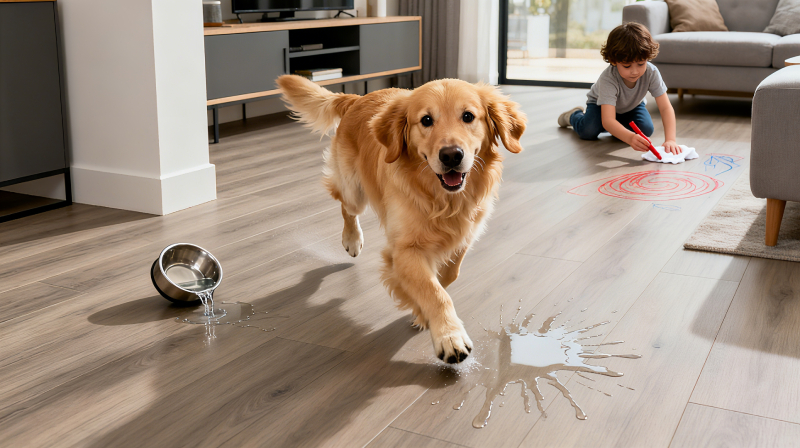
🏡 Family Homes with Kids & Pets
• The Challenge: Spills, scratches from claws, and constant foot traffic.
• LVT’s Edge: 100% waterproof core (no warping from juice spills) and UV-coated wear layers that resist pet nail scratches. Unlike laminate (which peels when wet) or hardwood (which stains permanently), LVT avoids “emergency replacement” costs.
• Cost Comparison: A 200-sq. ft. playroom with LVT costs ~50% less in 10-year upkeep than hardwood (no refinishing, no plank replacements).
🔧 Rental Properties & Vacation Homes
• The Challenge: High turnover, tenant neglect, and moisture in bathrooms/kitchens.
• LVT’s Edge: Anti-microbial coating prevents mold (critical for unoccupied vacation homes) and easy cleanup after tenant moves out. Tile’s grout lines and hardwood’s sensitivity to neglect lead to costly renovations between tenants.
• ROI Win: LVT installation recoups 85–90% of costs at resale, vs. 60–70% for laminate.
🧺 Basements & Wet Zones
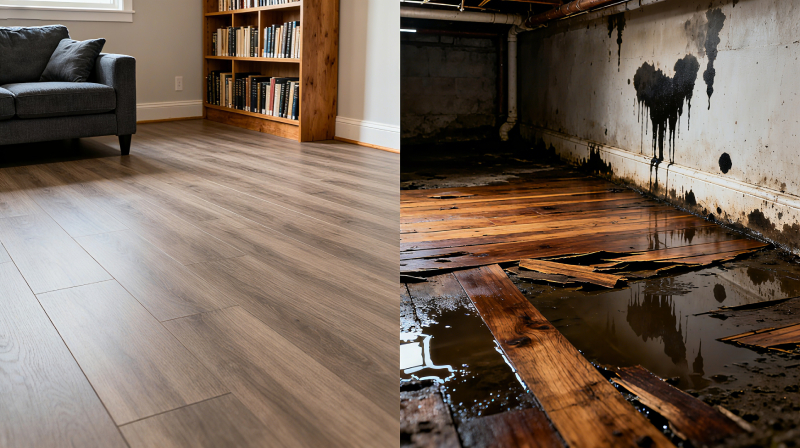
• The Challenge: Humidity, flooding risks, and uneven subfloors.
• LVT’s Edge: Works below grade (unlike most hardwood) and 100% waterproof (no tile grout leaks). No need for expensive vapor barriers (built into many LVT products, including CWWIN Floor’s offerings).
• Hidden Savings: Avoids $2–$5/sq. ft. in moisture remediation costs that plague laminate and hardwood in basements.
💼 Commercial Spaces (Offices, Cafés)
• The Challenge: Heavy foot traffic, spills, and quick installation timelines.
• LVT’s Edge: Click-lock systems reduce downtime (install in 1 day vs. 3–4 days for tile) and scratch resistance stands up to office chairs. CWWIN Floor’s commercial-grade LVT is specifically engineered for high-traffic use.
• Cost Per Use: LVT’s 25-year commercial lifespan means lower “cost per occupied year” than laminate (which needs replacement every 8–10 years).
3. Beyond Price: Why LVT Fits Every Budget Mindset
“Affordability” isn’t just for low budgets—it’s about smart spending. LVT caters to diverse购买力 by delivering value at every level:
For Budget-Conscious Buyers
LVT avoids “budget traps” like surprise maintenance fees. A mid-tier LVT product costs less upfront than engineered hardwood and eliminates laminate’s hidden replacement costs. DIY installation (for click-lock varieties) cuts labor expenses by 40–60%.
For Value-Driven Buyers
Investing in high-performance LVT (with 20+ mil wear layers, such as CWWIN Floor’s premium lines) pays off in longevity. Unlike tile (which cracks under heavy furniture) or hardwood (which fades in sunlight), LVT retains its look for decades—preserving your home’s value without constant upgrades.
For Eco-Conscious Buyers
Low-VOC, FloorScore®-certified LVT avoids the off-gassing of cheap laminate and the deforestation of solid hardwood. CWWIN Floor prioritizes sustainability, offering LVT lines with recycled materials that align with eco-friendly budgets.
4. Your Next Steps: How to Calculate LVT’s True Cost for Your Space
1. Assess Your High-Risk Zones: List areas prone to moisture (kitchens, basements) or wear (entryways, playrooms)—these will see the biggest LVT savings.
2. Factor in Prep Work: LVT needs minimal subfloor repair (save $1–$4/sq. ft. vs. hardwood/tile). Ask for a “total project quote” (not just material costs).
3. Compare Warranties: Look for long-term warranties (CWWIN Floor offers competitive coverage for residential and commercial use) to avoid replacement costs down the line.
4.Request Samples: Test scratch resistance (use a key!) and waterproofing (spill water) to ensure you’re not sacrificing quality for upfront savings. CWWIN Floor provides free samples to help you make an informed choice.
Cost Is About “Peace of Mind”
Waterproof scratch-resistant LVT doesn’t just save money—it eliminates the stress of unexpected flooring costs. Whether you’re a family avoiding pet-related repairs, a landlord cutting turnover expenses, or a homeowner boosting resale value, LVT’s cost impact is measured in years of worry-free use—not just a single invoice.
As a China-based flooring expert, CWWIN Floor offers tailored waterproof scratch-resistant LVT solutions for global clients. Ready to see how LVT fits your space? Contact our team for a personalized cost analysis and free samples.